Prestige and luxury replacement: what is usually supplied
Published · Last updated
If you drive a prestige car — 5 Series, E-Class, A6, XF, Range Rover — like-for-like supply extends into this band, but with honest limits: fleets hold prestige stock in far smaller numbers than mainstream classes, so delivery can take longer and exact-model matches are less certain. The GTA convention grades this territory finely — prestige groups P7–P13 (530/A6 examples up to the Rolls-Royce Phantom band) and 4x4 groups F5–F9 for Range Rover-class vehicles (GTA Technical rate tables, gtacredithire.com).
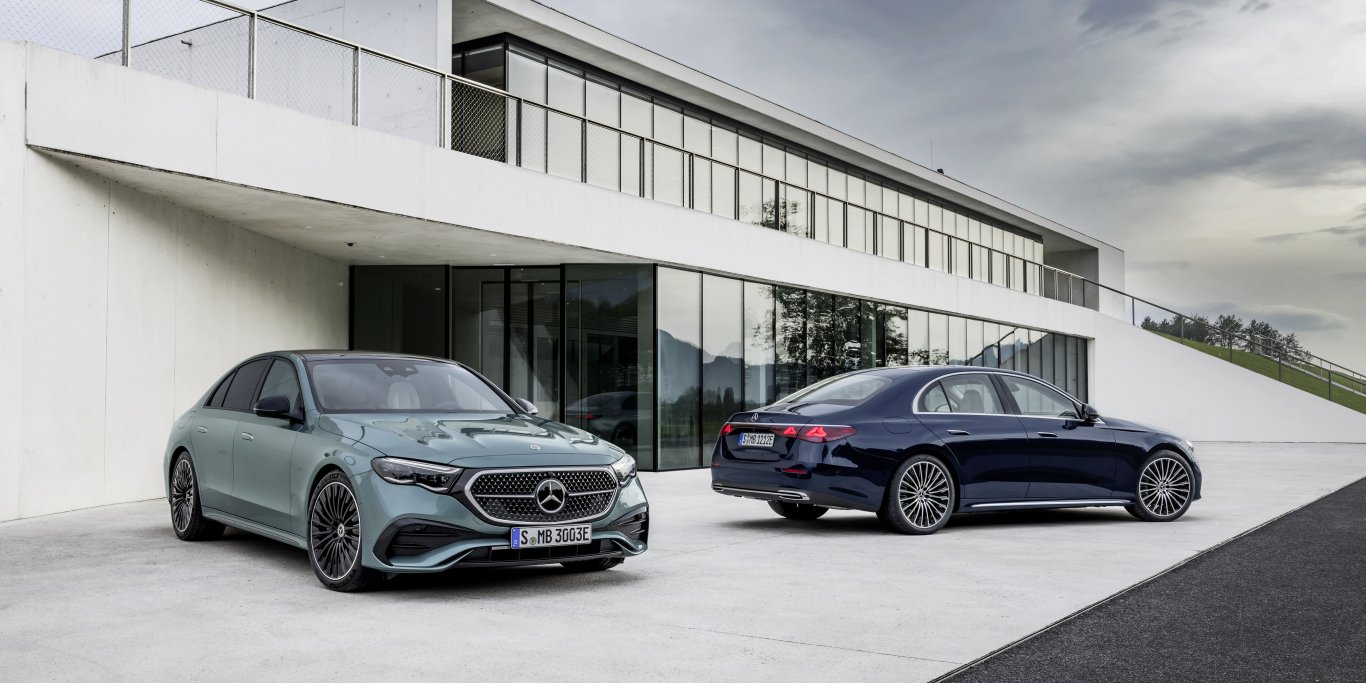 Prestige & luxuryClass example · exact supply varies
What replacement car will I get if I drive a prestige or luxury car?
| Model supplied | Why it is the match | Our review |
|---|---|---|
| Mercedes-Benz E-Class | The prestige-saloon supply staple | E-Class review |
| BMW 5 Series / Audi A6 | Direct in-band alternatives | — |
| Range Rover Sport / Velar-class | Luxury SUV matches, subject to availability | — |
| S-Class / 7 Series band | Specialist supply, arranged case by case | — |
Which models count as like-for-like for a prestige car?
An equivalent prestige vehicle in the same fine-grained band: a 520d and an E220d are matches; a 5 Series is not the match for an S-Class. The higher the band, the more the match is arranged individually rather than pulled from standing fleet stock.
What will I not be given?
Not an executive-class car for a luxury-class need — a 3 Series does not match an S-Class driver's position — but equally, at the very top of the market, the realistic supply is the nearest available prestige vehicle while a specialist match is sourced. This class is where "like-for-like" meets fleet reality hardest, and pretending otherwise would be false; the supply constraints are real and worth understanding before the conversation with any hire company.
Do you need a prestige or luxury replacement?
Need comes before class, and it is worth settling first. The Financial Ombudsman Service has said a referral into credit hire may not have been appropriate where it was clear a hire car was not needed — for example where a suitable spare car was available, where courtesy car cover was already sufficient, where the damaged car was still roadworthy and drivable, or where a policy already provided benefits at least as good. This is the class where the gap between what is wanted and what is needed is widest, and where a paying insurer is most likely to test it. It is also the class where supply is thinnest, so an early, honest conversation about both saves the most time.
Work through the test in full on do I need a replacement vehicle?, then check what would actually be suitable for you on what counts as a suitable replacement. What real supply changes is on availability.
All classes: vehicle classes explained · review library